

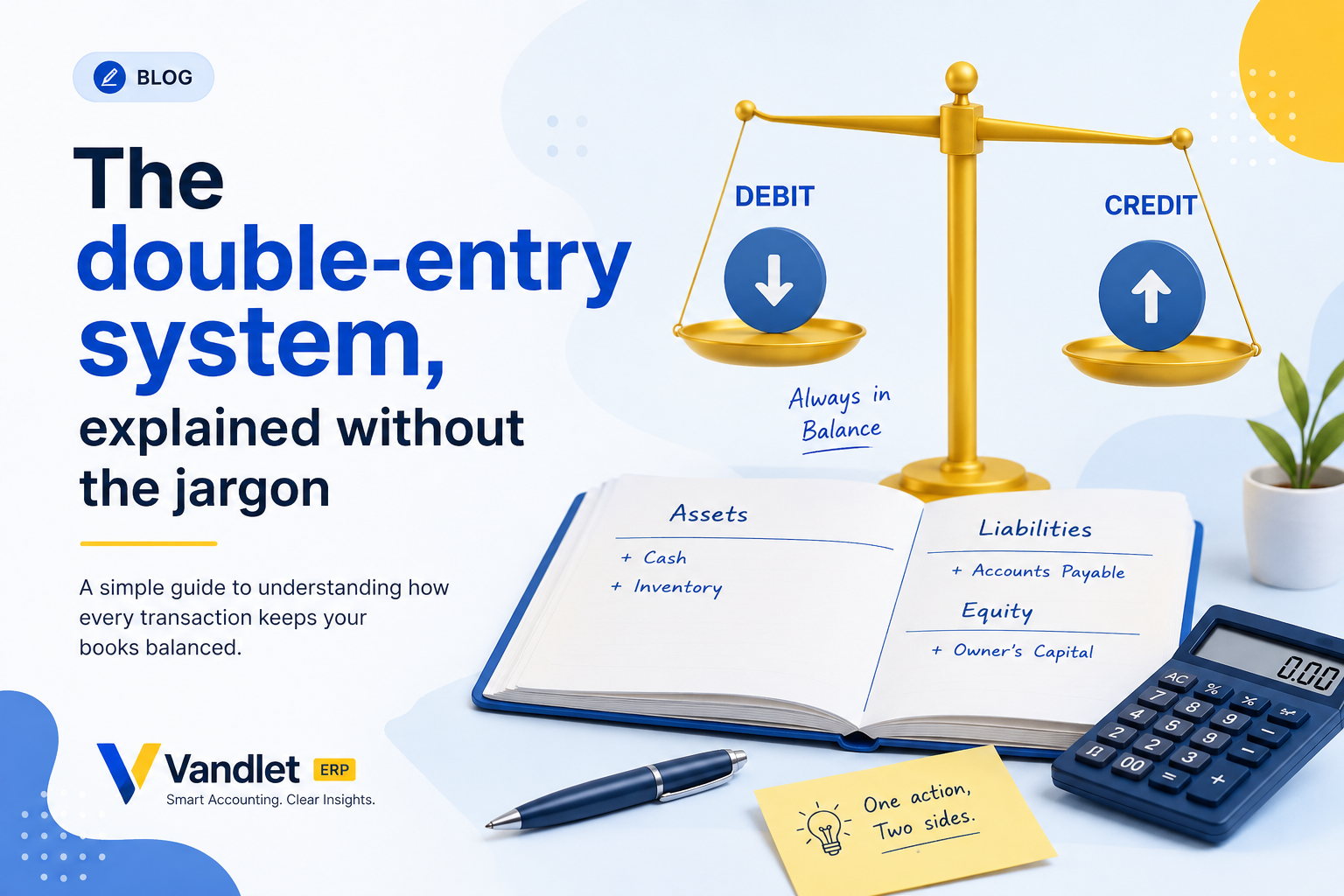
Double-entry bookkeeping is the reason anyone can trust a set of accounts. The principle is simple: every transaction touches at least two accounts, and the total debits must always equal the total credits.
When you pay UGX 2,000,000 for stock, two things are true at once, your inventory went up by 2,000,000 and your cash went down by 2,000,000. Recording only one half of that tells you nothing useful. Recording both means the books are self-checking: if they do not balance, something is wrong, and you find out immediately rather than at year end.
That self-checking property is what makes a trial balance possible, what makes an audit possible, and what makes a lender willing to look at your numbers. Single-entry cash lists cannot give you a balance sheet, cannot show you what you owe, and cannot be audited.
The practical takeaway for a growing business: the point at which you should move off spreadsheets is not when the spreadsheet gets slow. It is when you need to answer questions a cash list cannot answer, what am I owed, what do I owe, and what is this business actually worth.